

MobileTrader
MobileTrader: plataforma de negociação sempre à mão!
Baixe agora e comece a negociar!


 02.10.2026 12:46 PM
Markets are in turmoil: Brent crude has broken the $100 mark amid the Middle East crisis and an unexpected export ban from China.
In this briefing, we examine why Bitcoin is stuck in an October sideways range and what to expect from the standoff between crypto whales and macro forces.
We'll also cover corporate battles in IT: why investors are disappointed with Alphabet's AI monetization and how Meta's AI agents could strip Apple of billions in App Store revenue.
All these events are fundamental drivers that open new opportunities to profit from global trends.

Commodity markets are once again in a fever. On Thursday, benchmark Brent climbed past the psychologically and economically painful $100/bbl level. The spike was driven not only by another round of geopolitical tension but by an unexpected decision in Beijing that forced the market to revise forecasts for a global fuel shortfall.
The trading session began quietly — prices even dipped about 1% early on. Everything changed after an urgent Reuters report. Citing four informed sources, the agency said Chinese refiners had effectively frozen exports of petroleum products "until further notice" (with exemptions for Hong Kong and Macau).
That was followed by news that PetroChina canceled several October shipments of gasoline and jet fuel.
Critically, the ban targets refined products, not crude oil.
For markets, this was a red flag. "The Chinese export ban suggests concern about domestic product availability," UBS analyst Giovanni Staunovo said.
Beijing's move landed on already fertile ground for an energy crisis. Refining capacity worldwide is strained by the fallout from conflicts in the Middle East and Ukraine. Russia has exacerbated the squeeze by banning diesel exports at least until the end of October.
The biggest spark in this tinderbox, however, was news from the Middle East.
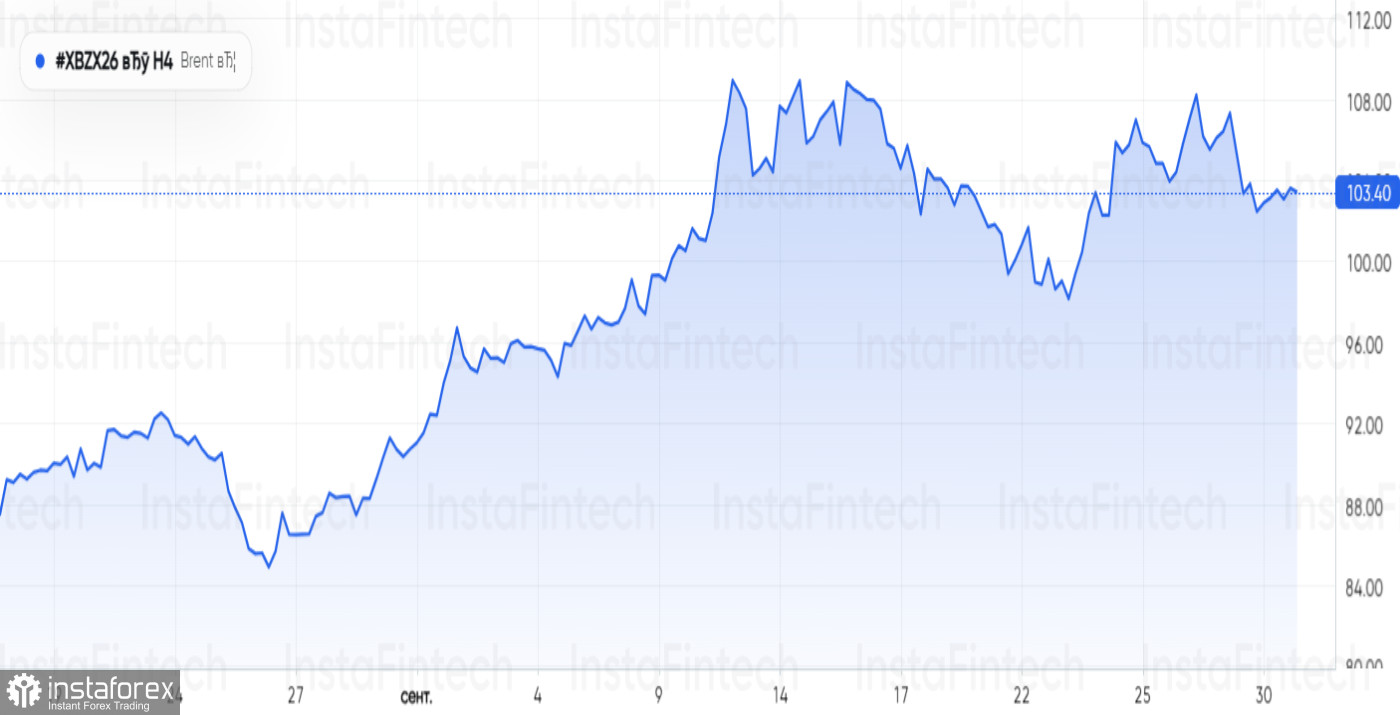
Reports that Washington is moving additional forces into the region and deploying another carrier instantly fanned traders' fears of escalation and fresh supply chain shocks.
The result was a bull win. The December Brent futures contract closed at $102.31/bbl (up 4.37% or $4.28). US WTI also rallied, finishing at $92.87 (+2.71%). Recall that Brent gained nearly 14% in September alone.
The supply squeeze showed up immediately in refiner margins. Asia's gasoline crack vs. Brent surged to a record $50.53/bbl. European diesel softened slightly to a $78/bbl premium, though on September 23, it hit an all-time high of $95.
Hamad Hussein at Capital Economics notes that while the Chinese ban alone is not comparable to the loss of Russian or Middle East volumes, it is yet another powerful source of stress on top of an already acute deficit.
As analysts model scenarios and governments scramble to balance domestic markets, professional traders have an excellent chance to profit from elevated turbulence.
All instruments mentioned, including Brent and WTI futures, are available on the InstaForex platform. Grab the chance to capitalize on global macro shifts: open an InstaForex trading account and download the mobile app to monitor prices in real time and trade from anywhere.
The top crypto has put investors through a roller-coaster ride heading into October. A bullish breakout attempt, fueled by fresh US macro data, quickly faded: after a short-lived push toward $85,500, Bitcoin retraced back to the $83,500 area. The market has gone into wait-and-see mode, and traders' eyes are fixed on a critical support zone.
The initial burst of optimism followed the August PCE report. Inflation slowed to 3.4% year-over-year, and the core PCE price index eased to 3.0%, beating analysts' forecasts. Bitcoin immediately reacted with a roughly 2% spike, but euphoria was soon replaced by profit-taking.
It's too early to celebrate: the surprise versus forecasts reflects more technical methodological changes than a genuine economic cooling. The inflation dragon isn't slain — it's merely lying low.
Entering the new month, the market faces a serious test of resilience. The key defensive line is $82,000. The main liquidation zone is concentrated between $82,000 and $82,500. If that floor gives way, a slide to $80,000 could accelerate avalanche-style. For the optimistic scenario to materialize, Bitcoin needs not only to hold $82,000 but to mount a confident push above $87,500.
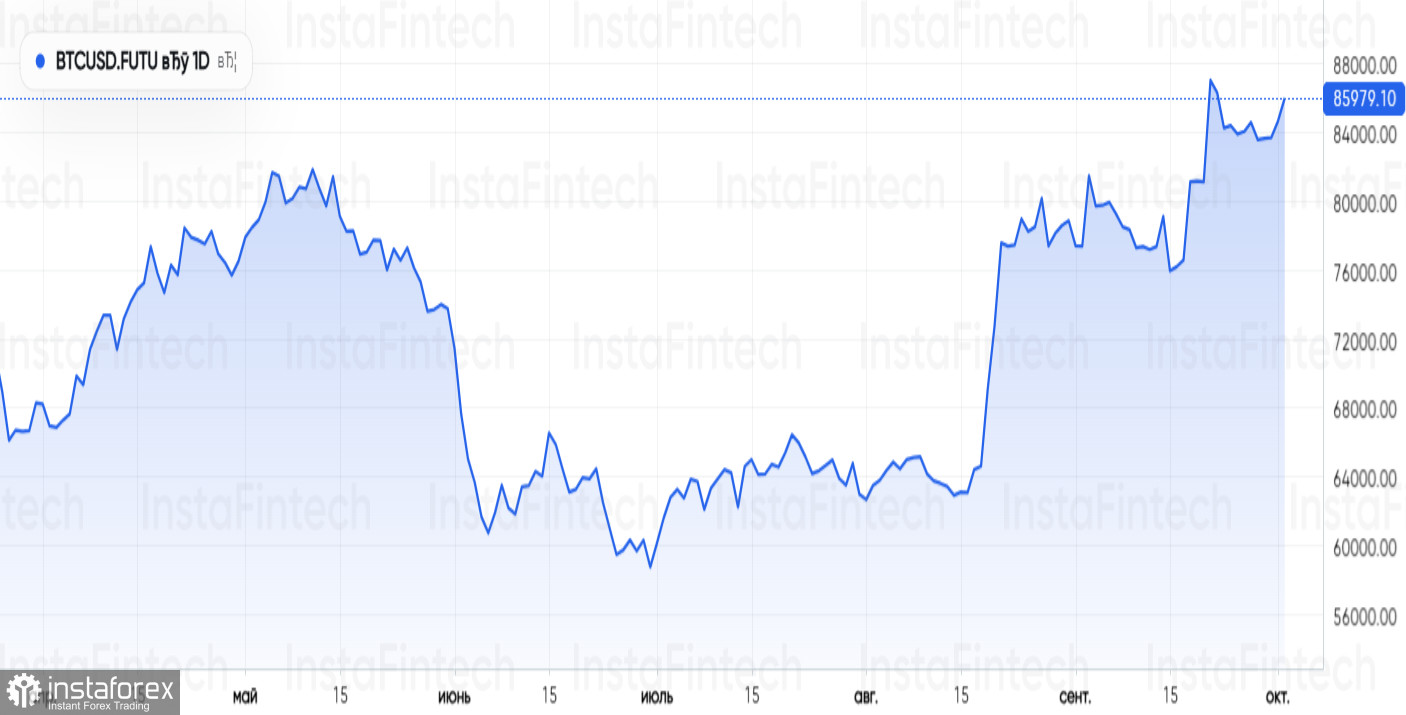
Historically, October has been a strong month for Bitcoin, but in today's environment, seasonality alone is not a sufficient investment thesis.
What is blocking bulls right now? On-chain analytics provide the answer. Large players have already built formidable sell walls. Coinglass data shows heavy limit sell orders clustered at $85,700, $87,000, $88,000, and $89,000, with the most impenetrable shield sitting near the psychological $90,000 mark.
The situation is worsened by long-term holders (LTH). The 84,000–85,000 range is where many traders accumulated in the past. Today, those holders are around breakeven, and any approach by the price toward their entry levels triggers them to sell to lock in at least a flat outcome. That behavior creates strong resistance and prevents Bitcoin from sustaining a break above $85,000.
The further fate of Bitcoin now hinges on two factors:
Volatility is guaranteed, which means ample opportunities to profit on both the upside and downside.
Thursday, October 1, was supposed to be a day of triumph for Alphabet. Google unveiled its new advanced neural network, Gemini 4 Argon, and the market reacted immediately. In pre-market trading, the tech giant's shares jumped by nearly 2%. It looked like a new milestone in AI. However, investor euphoria was short-lived.
By the open, the optimism had evaporated. Shares didn't just pull back — they lost about 2%, making Alphabet an underperformer even as the broader tech sector advanced.
For comparison: the Technology Select Sector SPDR ETF rose by about 1%, and the Invesco QQQ Trust posted a modest gain. Even Alphabet's main rivals in the fight for corporate IT budgets fared better: Microsoft shares were essentially flat, and Amazon dipped only slightly, avoiding the fate of the day's headline maker.
So what caused the skepticism? Analysts generally rated the model launch positively and highlighted an attractive entry price. But, as always, the devil is in the details. Wall Street was spooked by the release format.
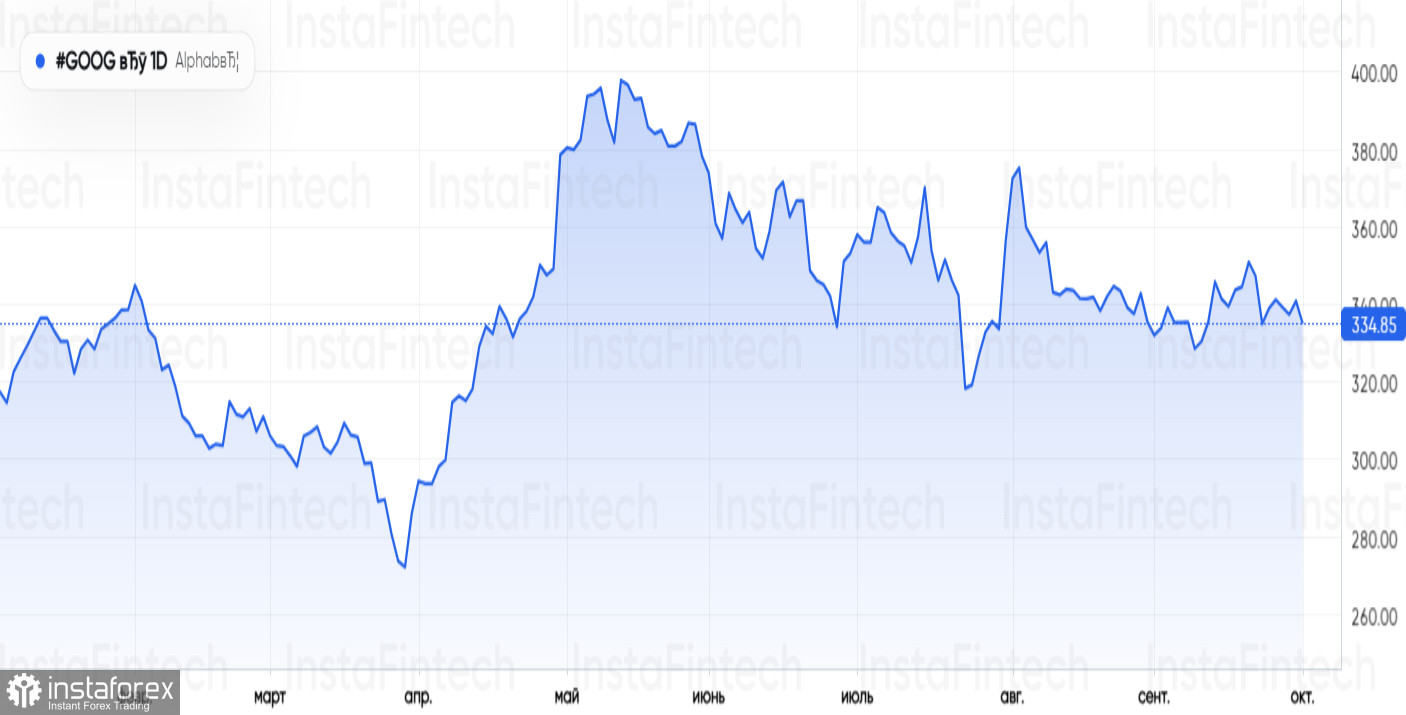
Google chose not to roll Argon out widely. Instead, it granted initial access only to a narrow circle of vetted cybersecurity experts under a closed Fairwind program. Corporate customers, developers, and ordinary subscribers will have to wait: the company is pausing to implement additional safeguards.
To investors, that looked like delayed monetization of the innovation — and therefore deferred near-term superprofits from the AI juggernaut.
Alphabet's case again shows that building a brilliant product is only half the battle in the stock market. Monetization timing matters, and investors need to read beyond the headlines to the subtle elements of corporate strategy.
The era of Apple's unquestioned dominance in mobile apps — and the steady "toll" it collected from every digital user action — may be ending. Wall Street is sounding the alarm: Meta's consumer AI agent Muse is targeting the role of the Internet's primary intermediary, and Apple's hugely profitable App Store is directly in its sights.
Needham analysts estimate that Meta's ambitions could cost Apple roughly $10 billion in lost annual revenue. The threat is a paradigm shift. Why should a user open an app, search for a service, and pay Apple's built-in commission when an AI agent can do it for them? If a neural agent books a table, buys a ticket, or signs up for a subscription autonomously, transactions can bypass the App Store entirely.
Needham analyst Laura Martin lays out the stark math:
For investors, this is a red alert. Wall Street values recurring service revenue well above hardware sales, and a hit to services would materially compress Apple's multiples and growth outlook.
Developers long constrained by Apple's terms are already sensing change. "You bring the API. Muse brings the agent, the browser, and the context of what the person actually wants," Mark Zuckerberg succinctly framed the new reality on X, launching Muse Connectors in mid-September.
The market response was immediate: within 168 hours of the platform launch, Meta received more than 1,500 developer applications. Martin warns that if Apple does not rethink what she calls its "greedy" economic model, developers could migrate en masse to Zuckerberg's ecosystem.
Ironically, the Muse app, designed to reduce dependence on app stores, shot to the top of the very App Store charts it threatens. Sensor Tower reports more than 3.4 million downloads already.
The challenge arrives at an awkward moment for Apple: it coincides with John Ternus taking the reins as CEO.
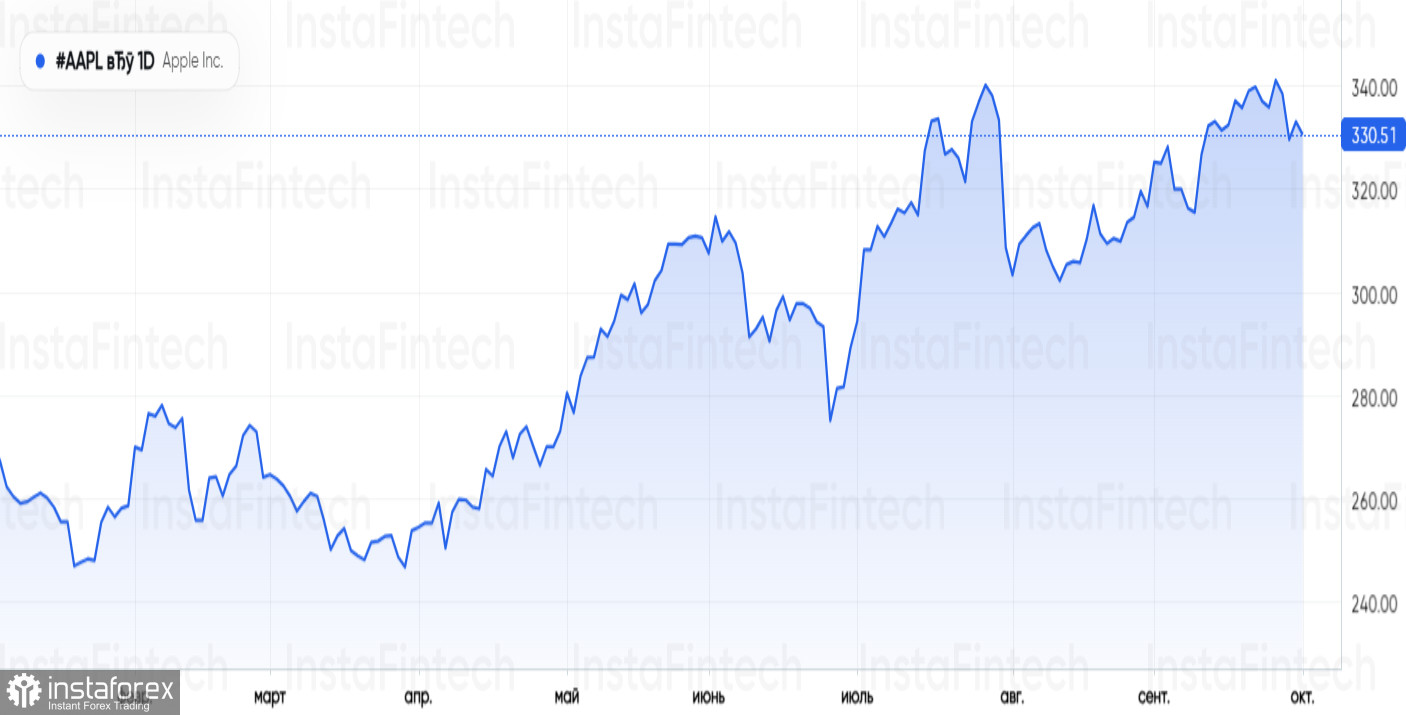
Morgan Stanley is watching the looming storm too. Analyst Erik Woodring acknowledges that "agent-based AI" can reroute search and transactions away from Apple's ecosystem. While the risk is still early, it has forced Cupertino into a frenzied effort to revive Siri. Woodring stresses that Apple's future now hinges on its success in AI. Still, while maintaining an Overweight rating, Morgan Stanley trimmed its Apple price target from $360 to $355 — a nod to rising execution risk.
As Silicon Valley giants tussle over who will own trillions in the neural-net era, markets are volatile. For traders, volatility equals opportunity.
Apple and Meta shares, the protagonists in this battle, are available on the InstaForex platform. To trade tech shifts and respond swiftly to Wall Street news, open an InstaForex account and download the mobile app to monitor markets and execute trades from anywhere.
MobileTrader: plataforma de negociação sempre à mão!
Baixe agora e comece a negociar!
You have already liked this post today
*A análise de mercado aqui postada destina-se a aumentar o seu conhecimento, mas não dar instruções para fazer uma negociação.
 E-mail para os autores de conteúdo analítico em texto e vídeo: content-authors@instaforex.com


